U.S. Stock Market
Solar Return
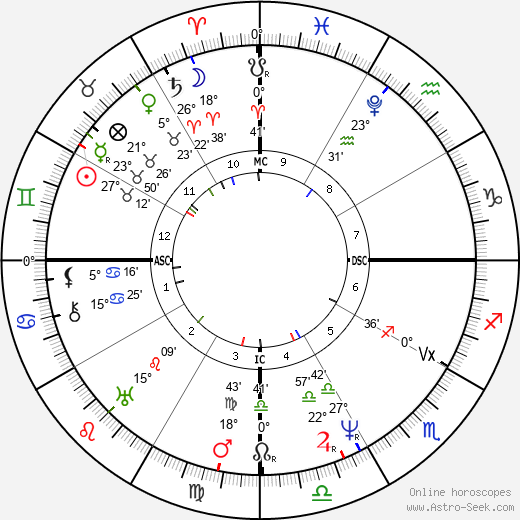
The U.S. Stock Market (USSM) possesses its own birth chart, also known as a natal chart (pictured in blog image), based on its first trade date of May 17, 1792, at 7:52 a.m. As explained in our recent publication, When to Buy and When to Sell: Combining Easy Indicators, Charts, and Financial Astrology (available on Amazon), and our U.S. Stock Market – Introduction blog, dated 4-27-24, this entity has a Cancer Rising sign (which is automatically considered the 1st house), a Taurus Sun sign (in the 11th house), and an Aries Moon sign (in the 10th house), as depicted in the chart above.
Please do not confuse the difference between the USSM chart and the zodiacal house order (which begins with Aries in the first house), as each individual or business chart begins with the 1st house at its own Ascendant/Rising sign. Therefore, there is often a mix between mundane/collective astrology and a natal birth chart when assessing planetary aspects and transits.
Also detailed in our publication are specific traits and attributes of the planets, signs, and houses, including the financial sectors they influence. They all tend to have some blended associations with the equity markets, though the most prolific financial houses are the 2nd, 5th, 8th, and 11th.
A Cancer rising sign for the USSM is fitting as it represents the home (which is the 4th house in the zodiac). Traits possessed by Cancer also include sensitivity and emotion (as it is ruled by the Moon), which also signifies the home, the mother, and emotions. It is interesting that it also has the planet Uranus in the 2nd house (self-worth, income generation), in the sign of Leo (ruled by the SUN), as that planet is known for its sudden, unexpected events, and unpredictability. The “market” is often very volatile, and is extremely sensitive and reactionary to macro news events, which incites human emotion. As we also stress many times in our publication, human emotion/sentiment is the driving force in the markets, especially in the short term.
The Solar Return for any chart occurs once every year, for about 30 days, when traveling through the Sun sign on the birth chart. Most recognize this sign as their identification in the horoscope as the sign that contains their actual birthday. Remember that the Sun sign can appear in any of the 12 houses, as the Ascendant is assigned the 1st house, as earlier mentioned.
Any “return” to a home sign tends to bring to light the related energies, and there is no stronger energy than the Sun. Since it is located in the 11th house of the USSM, it appropriately represents a grand picture of financial/wealth, as Taurus (money) symbolizes the same as the 2nd house of the zodiac. Planets occupying this sign in the USSM chart also include Mercury (communication/technology) and Venus (money), as well as an entity known as the Lot of Fortune (financial fate). With Venus entering the sign of Cancer on May 18, it will be aligned favorably with the Solar Return of the stock market.
Recent May 17 S&P 500 results have been positive (market closed in 2025) though there is no historical pattern to formulate a probability of price direction for that date. The old adage Sell in May and Go Away has faded over recent years (please refer to our publication and previous blogs for more details), and the results on this date are often dictated by the overall market sentiment at the time. This year, with Uranus’ and Venus’ ingress to the sign of Gemini tomorrow, April 25, new energies may boost markets, however, that will occur about three weeks prior to the Solar Return. For investor’s, the date will likely be a non-event, while traders may benefit from a possible move with the NEW Moon crossing from Taurus to Gemini in the very early morning hours, at the same time Mercury (the planet of trading) conjuncts Uranus as it also transits from Taurus to Gemini.
Historical events tend to have huge implications regarding the equity markets and the overall financial system. Many of the same themes tend to repeat themselves, and through time Pluto in Aquarius, and Uranus in Gemini have resulted in major transformation events including the American Revolution, French Revolution, the Irish Uprising in the late 1700’s, and the creation of the American Constitution.
Financial sectors to focus on going forward long-term include AI, electric vehicles, robotics, and space technology.
***Additional planetary positioning can also affect and vary the potential outcome of any transit, in addition to macro events, and Federal Reserve decisions.
In future blogs we will continue to discuss important planetary transits and aspects, and how it may relate to market movement.
For your own FREE personal or business chart, please visit the website www.Astrophilaastrology.com, and consider a reading from experienced astrologer Ophilia Luna - you will be amazed!
***As always, this information is not intended to be financial advice, or any specific buy or sell recommendation, but rather a guide to assist the reader in some further understanding of current economic conditions/movements in the sky, and how they can affect moods, behaviors, world events, and financial markets.